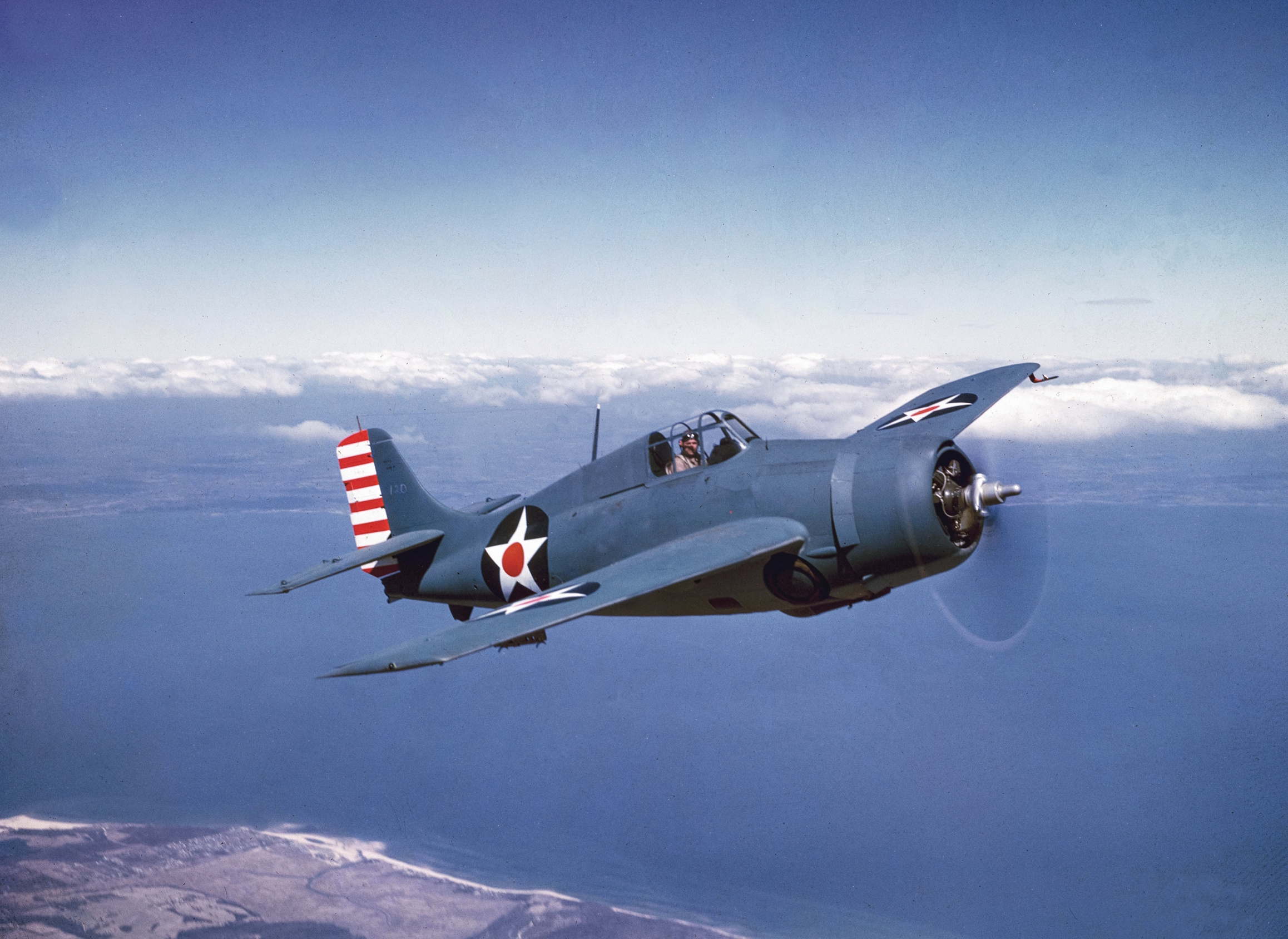
The Grumman Aircraft Engineering Corporation of Bethpage, New York, was a major supplier of combat aircraft for the US Navy from the early 1930s. Originally founded in late 1929, from its earliest days the company had significant links to the US Navy’s aviation activities, significantly as a designer and manufacturer of biplanes for service aboard aircraft carriers. Starting with the FF-1, which first flew in prototype form during December 1931, Grumman produced a line of radial-engined naval fighter biplanes that culminated in the F3F of the mid-1930s.
During 1935, the US Navy Bureau of Aeronautics issued a requirement for a new carrier fighter as a follow-on to the F3F. To enter the procurement process, Grumman’s designers turned to the tried and trusted biplane layout of its previous successful naval aircraft. The new design project created sufficient interest to result in a contract for the building of a single prototype, which was delegated the official designation XF4F-1 (Grumman Model G.16), the ‘X’ signifying ‘experimental’, the initial ‘F’ standing for Grumman in the US Navy Bureau’s complicated naming process, the final ‘F’ meaning ‘fighter’ and the ‘4’ signifying the fourth fighter design by Grumman.
However, the company faced important competition from the Brewster Aeronautical Corporation to meet the 1935 requirement. Brewster’s entry was a monoplane with retractable undercarriage and provision for 0.5in machine guns. Much favoured by the US Navy’s procurement personnel, the competing Brewster design also received a prototype contract as the XF2A-1. In comparison to the modern layout of the Brewster contender, Grumman’s biplane appeared pedestrian and out of step with contemporary fighter designs.
The company began a radical redesign of the original XF4F-1 layout to create a monoplane. Grumman duly convinced the
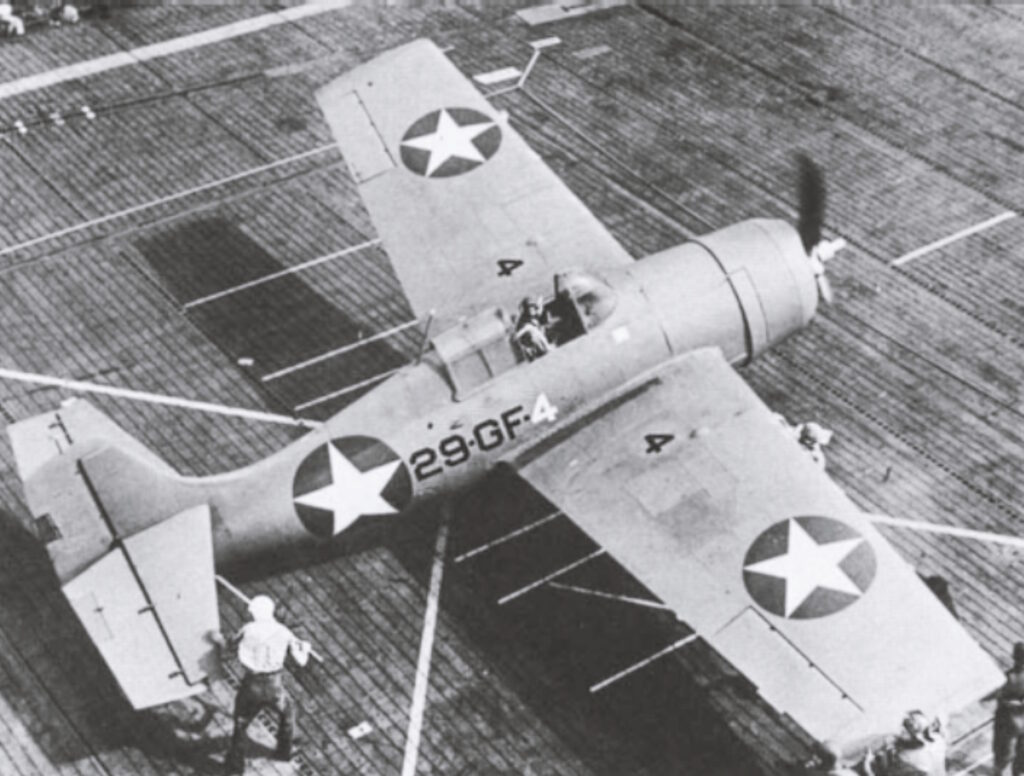
Wildcats performed a number of roles for the US Navy in addition to their main fighter mission. This F4F-4 of VGF-29 was photographed aboard USS ‘Santee’ and was assigned to spotting naval gunfire during shore bombardments. US Navy
naval procurement personnel to abandon the XF4F-1 and fund a new prototype, which received the designation XF4F-2 (G.18). The result was a much more purposeful aircraft in monoplane configuration, armed with two wing-mounted 0.5in machine guns and two upper forward fuselage 0.3in weapons. It retained the deep fuselage of the previous successful Grumman biplanes, into which the narrow main undercarriage retracted, and bore a resemblance to the competing Brewster design.
Allocated the US Navy Bureau of Aeronautics Serial Number (BuNo) 0383, the aircraft first flew on September 2, 1937. It was entered in the procurement competition which began on March 1, 1938, at Naval Air Station (NAS) Anacostia outside Washington DC. The Grumman competed well against the Brewster XF2A-1 and a Seversky entry, the P-35-derived XNF-1, but significant engine overheating problems had plagued the design from the start. The competing Brewster design was duly declared the winner in June 1938 and received production contracts to become the F2A-1.
“It was given the name Wildcat, thus
beginning the famous line of Grumman feline fleet fighters”
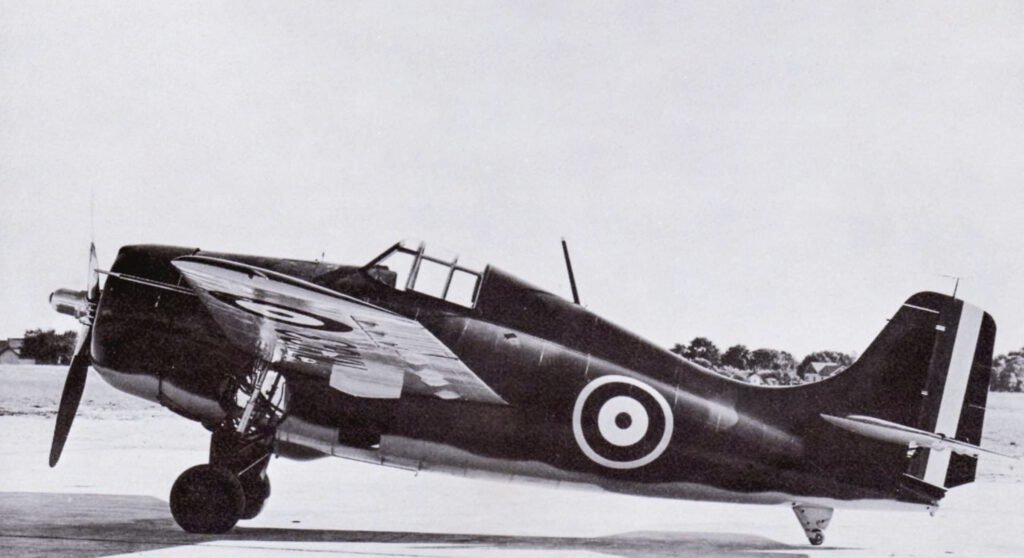
Initially intended for France, this was an early export G-36A and is wearing its temporary US registration ‘NXG3’. It became a Martlet Mk.I in Royal Navy service.
Grumman