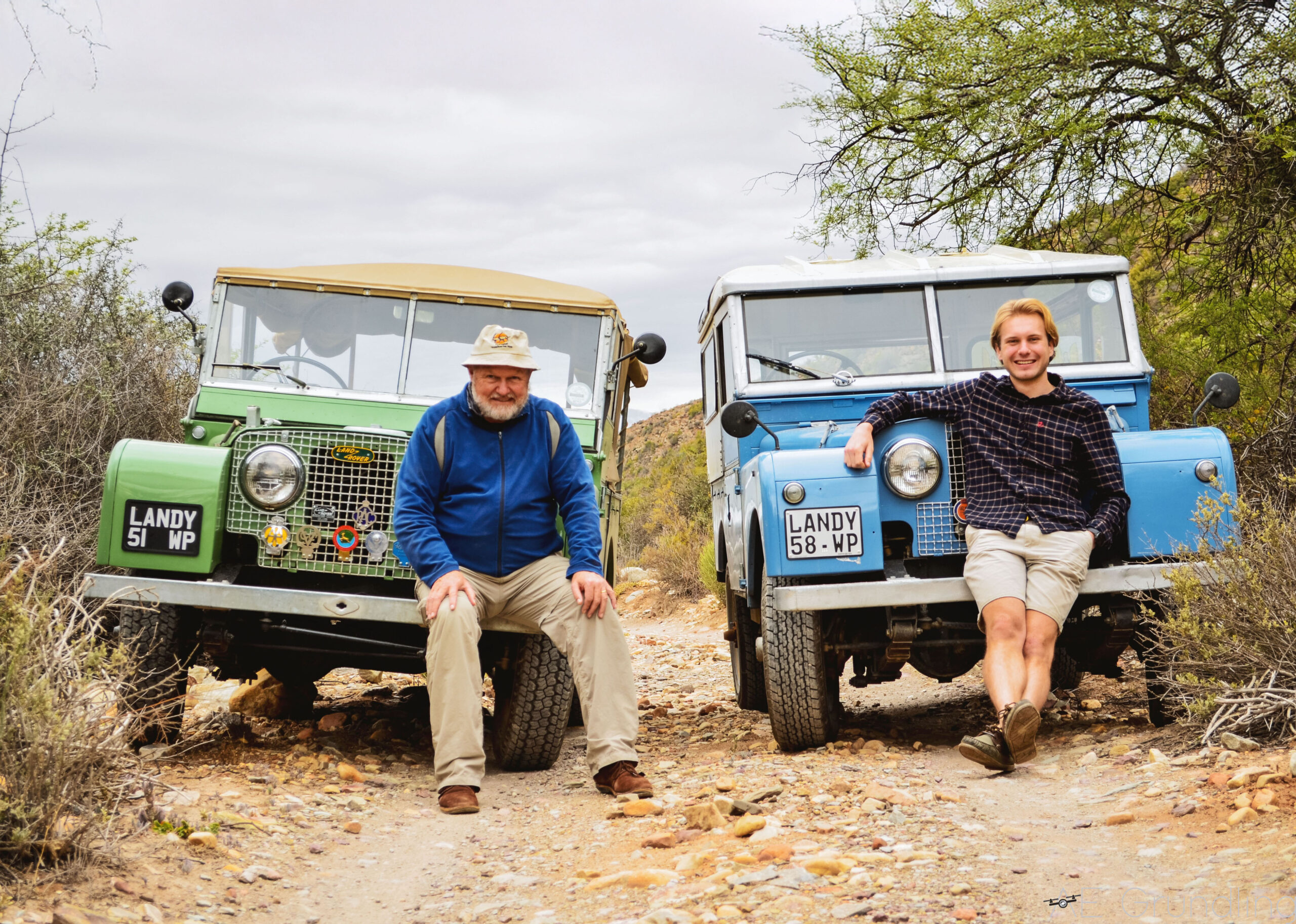
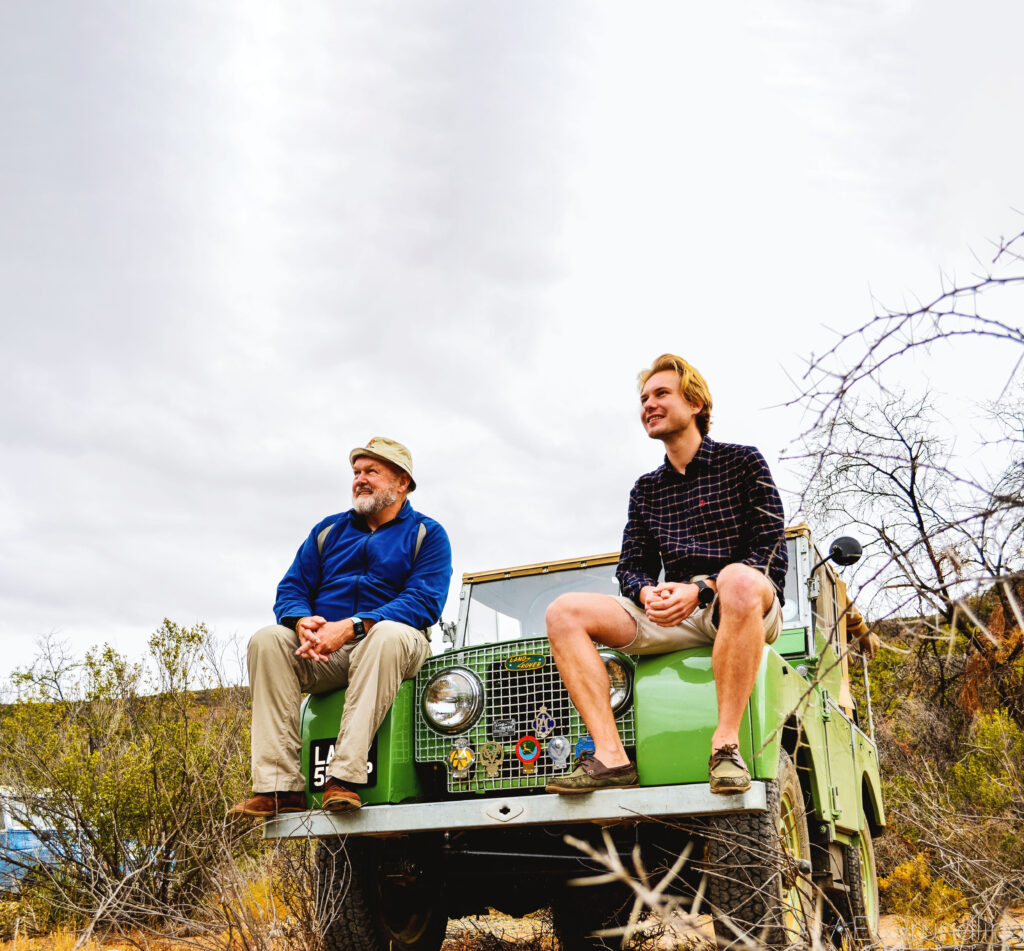
Martin Grotepass and his son Frans are the owners of two exceptional Series Ones
Words Hendrik Bester, Pictures Frans Grotepass and Hendrik Bester
My first glimpse of the 1951 80in Series One with the number plate Landy 51-WP was in the car park of a shopping centre in George, South Africa. I could tell immediately that it was a rare beauty.
The quality of the paintwork, the newly fitted canvas, the lights behind the grille, the early Series One dashboard, the half-moon-shaped seats, and the pedals earthed into the footplate all stood out.
I left a note on the vehicle asking the owner to contact me. To my surprise, Martin Grotepass, a pharmacist, called me that evening. Martin told me that he had been the proud owner of the 80in for the past six years.
“But there’s more,” Martin said. “My son, Frans, also owns an 88in Land Rover. He currently lives in Cambridge in the UK, but is visiting South Africa at the moment.”
It turned out that they had purchased the 88in in 2015 and the 80in in 2018. Both vehicles had similar number plates: Landy 51-WP and Landy 58-WP.
The letters stand for Western Province, one of the nine provinces in South Africa, while the numbers represent the production years of the Land Rovers.
Frans later explained that they were fortunate the numbers were still available on South Africa’s NATIS car registration system.
The next day, I set off for the exceptionally beautiful coastal town of Wilderness on South Africa’s Garden Route. As I drove, my thoughts wandered to the title of the article I planned to write.
Suddenly, the song Father and Son by Cat Stevens came to mind, with his unmistakable voice and guitar playing: “Look at me, I am old, but I am happy. I once was where you are now, and I know that it isn’t easy.” My daydream was interrupted by the voice on my GPS: “You have arrived at your destination.”
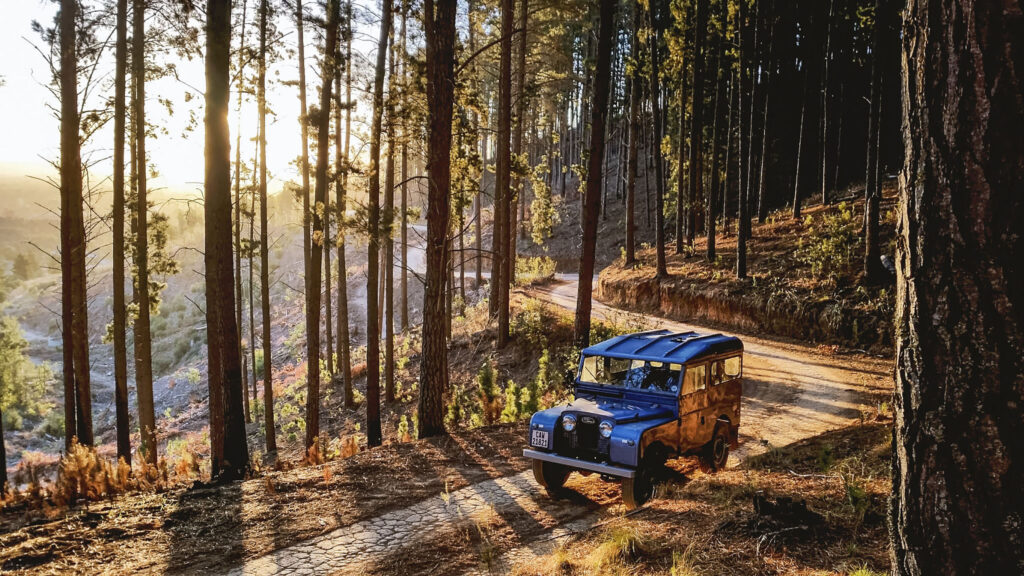
The two golden oldies waited for me in front of their house parked side by side: the sage green 80in Landy 51 and the Westwood blue 88in Landy 58. Inside, I met the father and son: Martin, in his 60s, had a friendly demeanour and a grey beard. Frans, at 29, was a blond with a neatly trimmed short beard.
They welcomed me not only into their home, but also into their Land Rover world, filled with books, stories, and displays.
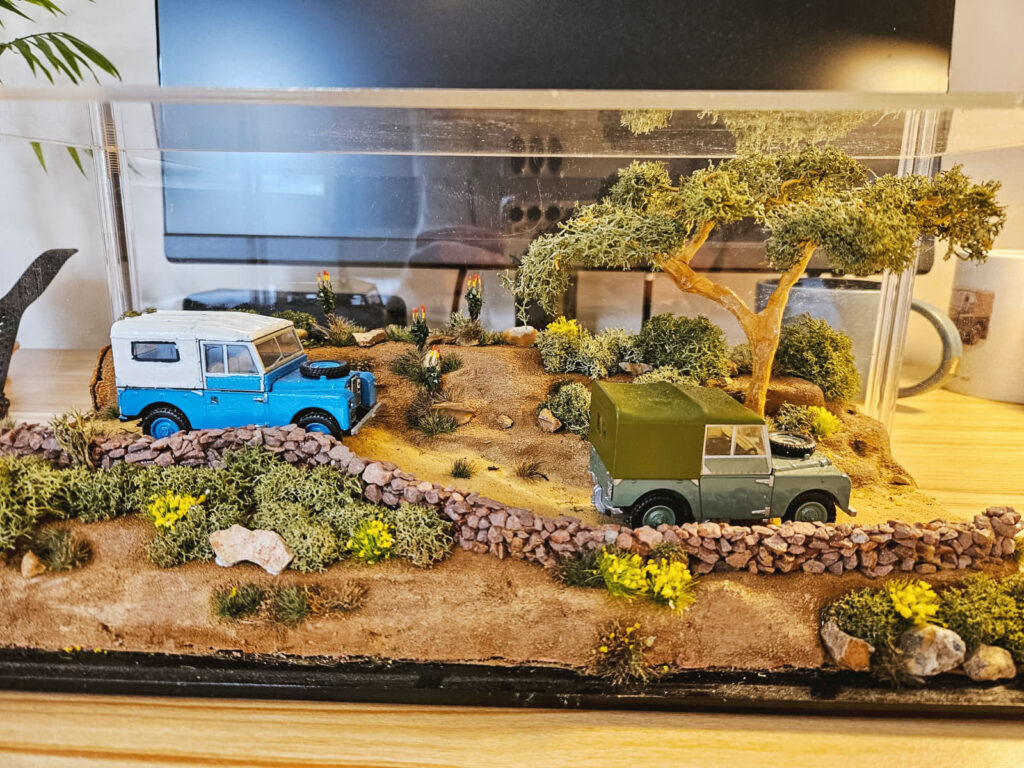
Frans proudly showed me two miniature mood board displays he had created about the Land Rovers, along with a few vintage model cars on the shelf.
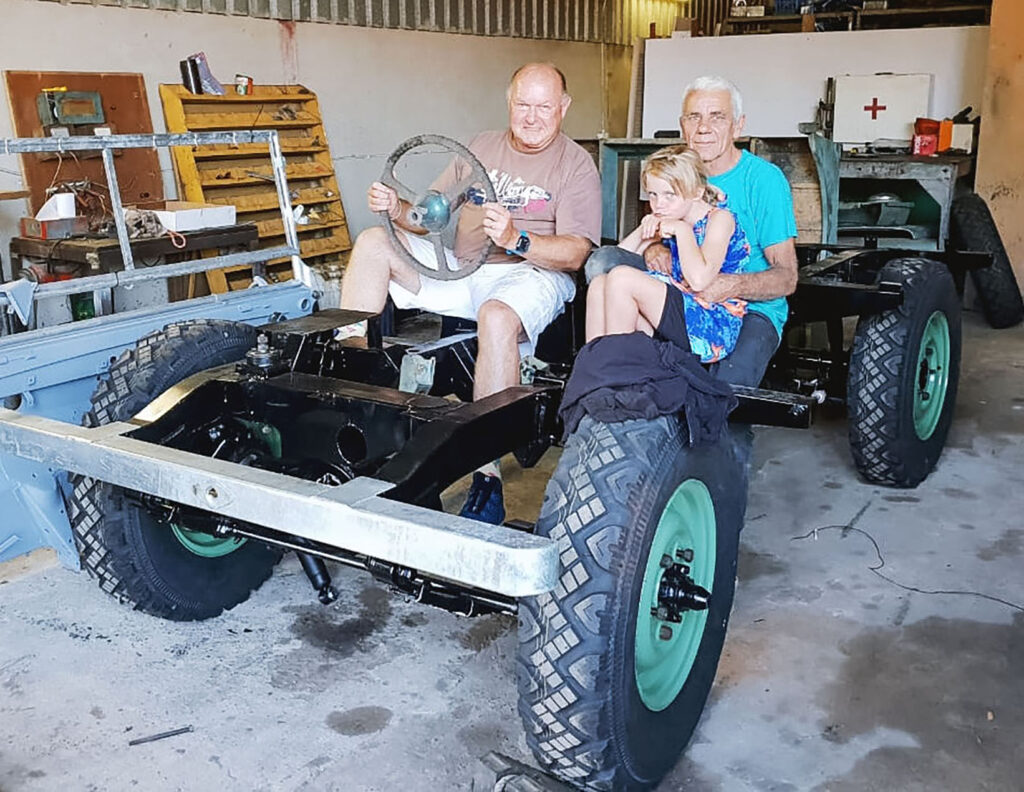
Their love affair with Land Rovers began in the 1990s when Martin had a stake in the Lisataba Private Game Reserve on the Olifants River in South Africa’s northern Limpopo Province.
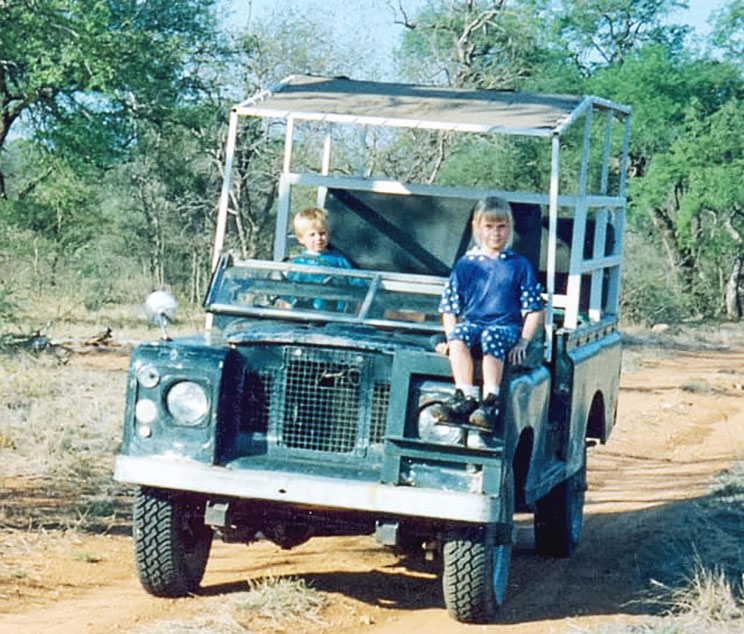
On the farm, they used Series III Land Rovers for game viewing. Their first purchase was a 1971 Series IIA game-viewing Land Rover. A young Frans would often sit on the front fender in a specially fitted tractor chair designed for the game spotter.
Martin’s second Land Rover was a 1962 SWB, which Frans fondly recalled with a smile as he showed me photos of these vehicles. “I grew up in the back of the SWB,” he said. Martin smiled and added: “After selling the SWB when we moved to George, Frans never fell out of love with Land Rovers.”
The year before Frans turned 20, they purchased WP58 for R25,000 (about £1,200). Martin recounted how he once saw a woman driving the 88in and told her to call him if she ever decided to sell it.
Frans, who was then an engineering student at Stellenbosch University, decided to drive the Land Rover to Stellenbosch and use it as his student vehicle.
The journey of more than 450km took him four challenging but enjoyable days, as he deliberately chose gravel roads, forcing him to cross mountain passes like Montagu and Swartberg.
“Thinking back,” Frans said, “it was a risky drive because the second gear wasn’t functional due to wear and tear on the gearbox. It also had a Citroën carburettor, the steering was heavy to handle, and it pulled in one direction.”
While in Stellenbosch, Frans met Bob Young, an old-time Land Rover specialist originally from Zimbabwe who had worked on Series One and II Land Rovers as a young mechanic.
Frans spent his holidays working with Bob, learning the intricacies of Land Rover mechanics. Together, they overhauled the steering, replaced the carburettor, and rebuilt the gearbox.
When Martin and Frans bought the 88in it was in relatively good condition but had undergone a restoration that Martin described as “subpar”. Its original colour was Dove Grey, but parts that should have been galvanised were made of steel and sprayed with grey paint.
Not much is known about its history. The chassis number, 112-8-01385, indicates it was exported to Namibia shortly after its dispatch date of February 13, 1958. It originally came with a 2,000cc petrol engine, later replaced with a 2,286cc petrol engine. Its original number plate was CAW 21821, which was re-registered as Landy 58-WP in 2018.
Now a hydraulic engineer in the UK, Frans returns to South Africa for short visits. During these trips, he enjoys driving his Land Rover to the max, easily travelling to nearby towns 60 miles or more away. He describes the vehicle as reliable and deeply satisfying to drive.
Driving Frans’ 88in was indeed a pure joy. It drove smoothly, with plenty of power, seamless gear changes, and soft leaf springs that made the ride comfortable. The brakes were responsive and quiet, with no squeaks. It was a cold, cloudy day in Wilderness, so the interior stayed pleasantly cool.
Frans pointed out that the canopy is period-correct and was the same one used on the first Oxford Expedition Land Rovers.
Martin uses his 1951 Land Rover, affectionately named Bob, every day to commute six miles from his home to his pharmacy. The vehicle was named after Bob Young, the Land Rover specialist who trained Frans during his university days.
When we took Bob, the WP51, out for a drive, Martin shared how the Series One “automatically transports” him back to the 1950s – a sentiment maybe all classic Land Rover owners could relate to.
Bob offers a comfortable driving experience. The steering is stiff, the gear changes are smooth, and the brakes are sharper than I’m used to.
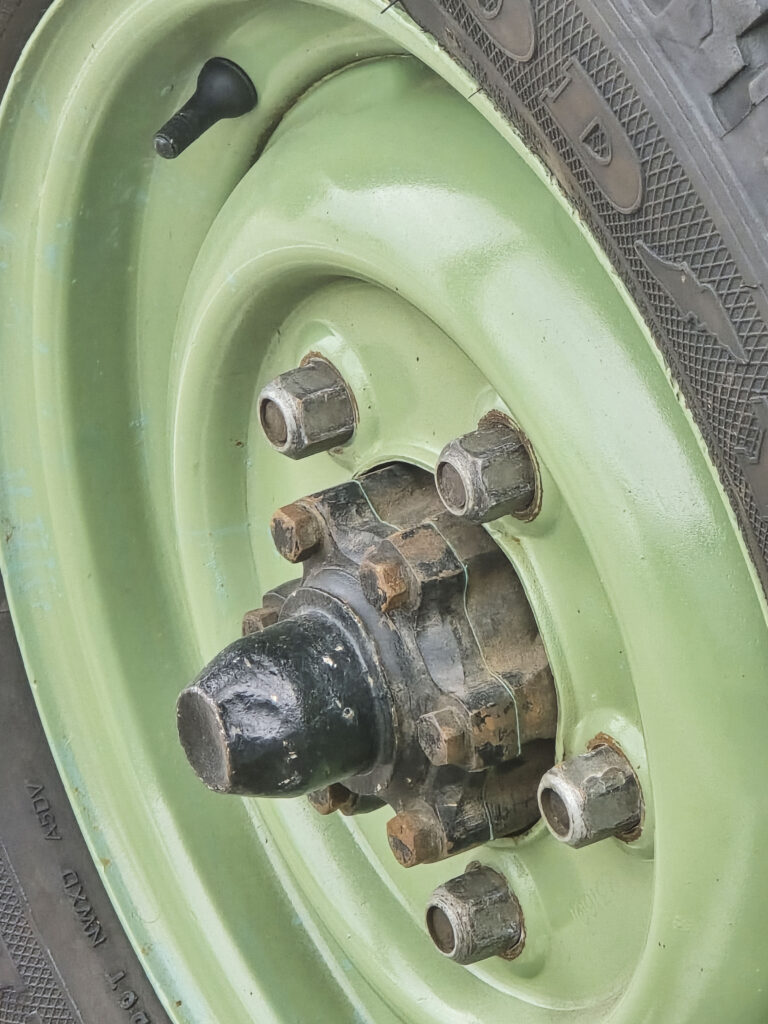
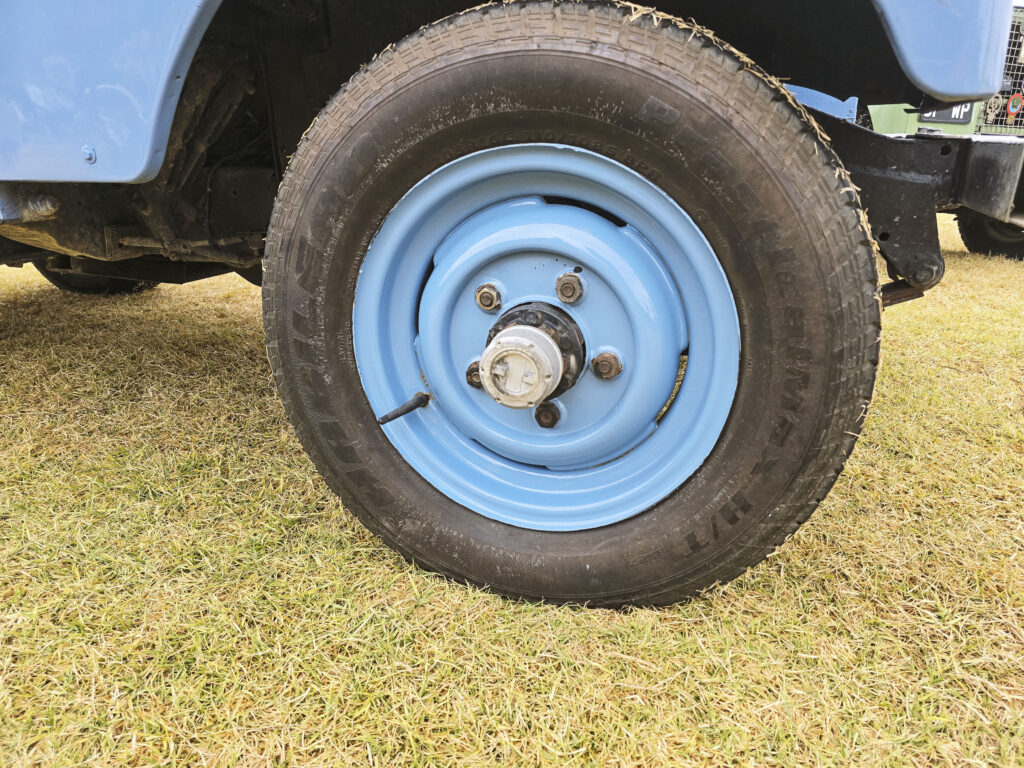
Martin explained that they had fitted Series III drums in the front and moved the Series One brakes to the rear wheels. The seats are upright, making you feel like you’re sitting on the Land Rover rather than in it, which took some getting used to. I also had to familiarise myself with the indicator switch.
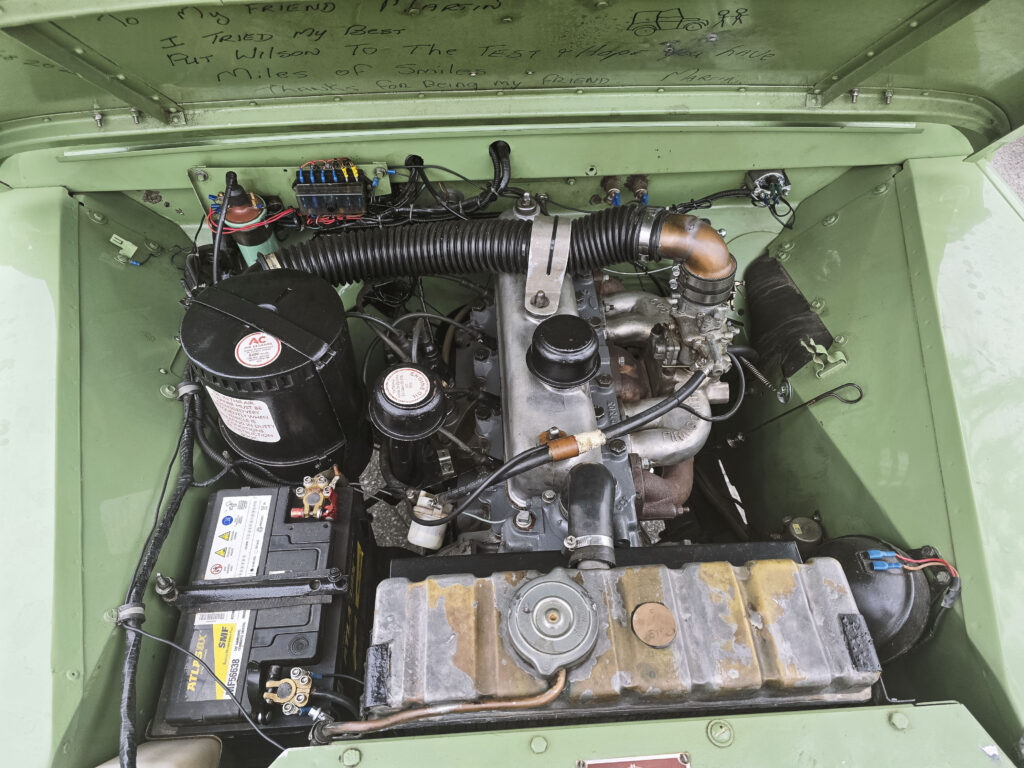
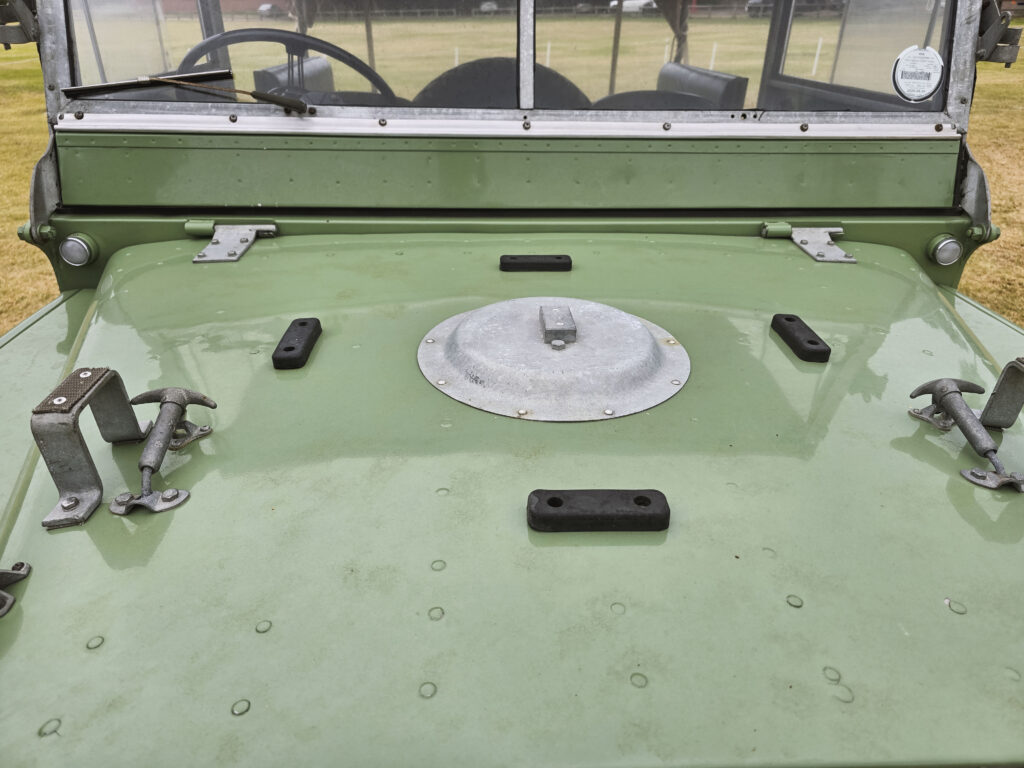
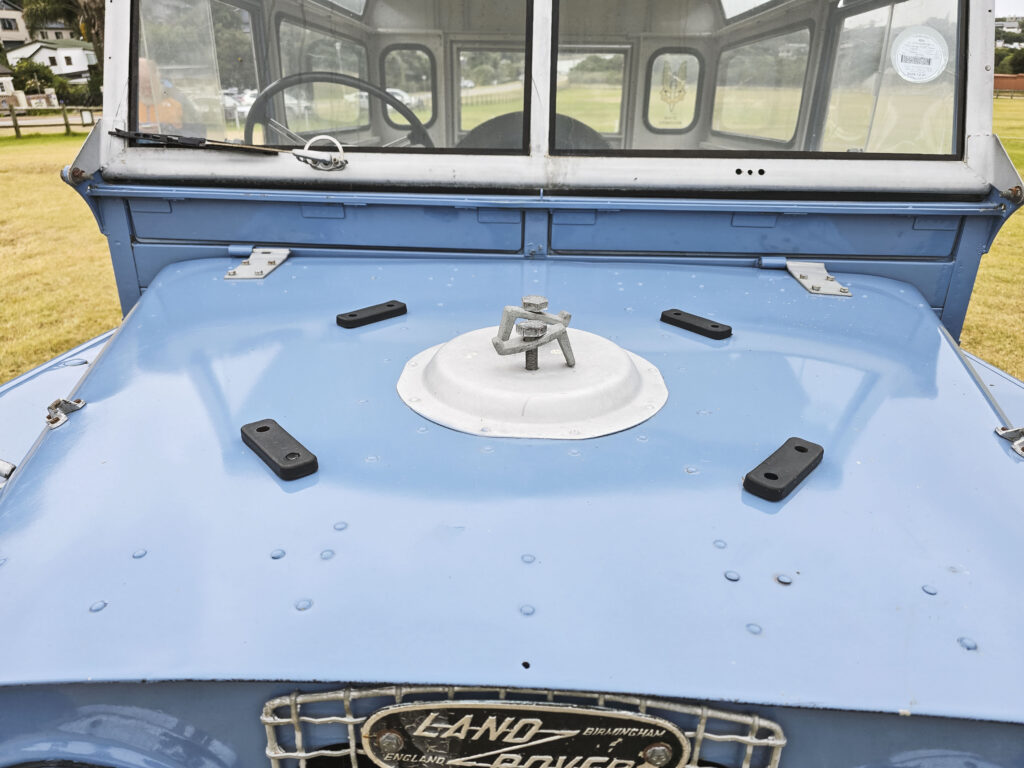
The canvas canopy, imported from the UK, still looks brand new. Bob’s green paintwork is immaculate, with every detail in place. The bonnet has the rubbers and fittings for the spare wheel, but Martin decided to mount it at the rear of the seats instead.
The restoration of Bob took two years and was completed in 2020 by Martin Potgieter, a skilled mechanic and rowing friend of Martin. Bob was imported from Zimbabwe after Martin heard from travelling friends about a 1951 Land Rover in relatively good condition near Bulawayo.
He tracked down the 85-year-old owner at a retirement home in Fish Hoek, Cape Town. Arrangements were made to import the car to South Africa and send it directly to Martin in Vryheid, KwaZulu-Natal, for restoration.
According to Frans, Bob left the UK factory on May 12, 1951, with the chassis number 1-616-2812. It was originally fitted with a 1,600cc engine, configured as a right-hand drive, and painted green.
It was destined for the Commonwealth and sent to Northern Rhodesia, where it endured hard labour.
Bob worked in the Copperbelt and contributed to the construction of Lake Kariba until 1960. Its whereabouts between 1960 and 1990 remain unclear, but it was eventually purchased by John App, who used it on his farm, Hunter’s Moon, for various tasks, including ploughing.
In 1992, a 2,286cc engine was purchased at a government auction and fitted in Bob, along with a 1957 gearbox and a 1964 transfer case.
Between 2007 and 2018, Bob was stationed on a farm near Bulawayo. When Martin purchased Bob in 2018 from John App, it was painted blue and bore a yellow registration plate numbered 136 989A.
Martin and Frans conducted extensive research to ensure the restoration was period-correct. They visited Jaguar Land Rover Classic Works to observe some of the finest 80in restorations in the world and the British Motor Museum, where they viewed the Queen’s Series One and HUE.
The steering rack’s preload posed a significant challenge
During their UK visit, they met John Bishop, who provided invaluable guidance and received additional advice from Owen Walton, a South African Land Rover expert based in nearby Oudtshoorn.
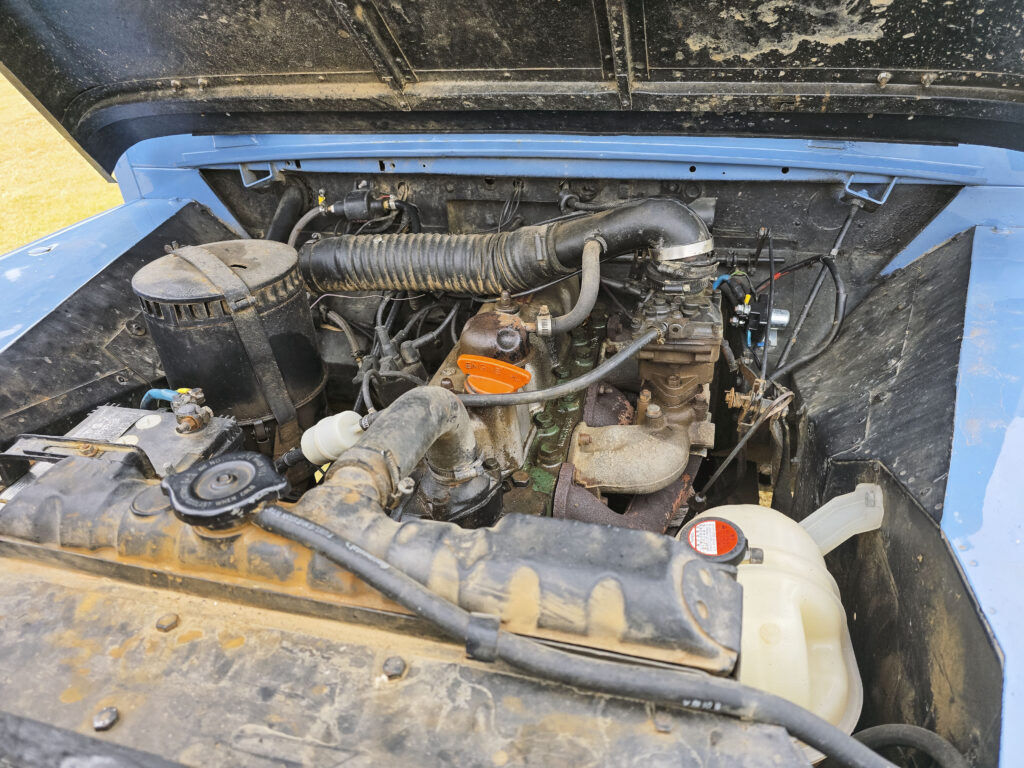
Walton helped rebuild Bob’s Series IIA gearbox, and Martin sourced a 1963 Series IIA 2,286cc engine to replace the old one. They purchased various parts for the restoration, including a tailgate from Charl Maritz, who manufactured new panels to specification in Krugersdorp.
Charl also refurbished the radiator with a new core while retaining the original Series One top. Martin even commissioned a kettle maker in Port Elizabeth to produce a copper air inlet pipe for the carburettor.
The steering rack’s preload posed a significant challenge, but a toolmaker in Birmingham, UK, manufactured a new set for the steering. An additional petrol tank was fitted under the seat on the opposite side.
The restoration is marvellous. From the sage green paint to the lights, seats, indicators, canvas, vent openers, steering wheel, and even the lights – it has all been done to original specifications. Martin admitted it was a lengthy process to register the car in his name, but he ultimately succeeded.
Frans is a true student of Land Rovers, particularly the early Series One models. When in the UK, he attended numerous Land Rover rallies and made a concerted effort to acquire some of the most authentic books on the subject.
He methodically guided me through his collection. One of his favourite books is Land Rover: The Early Years (1982) by Tony Hutchings. Only 1,000 copies were ever printed, and the book includes detailed coverage of the 48 pre-production models.
Hutchings notes that number 39 was reportedly sent to Zimbabwe, though its trail has since been lost. The book also features hand-drawn sketches highlighting the differences between the early and later 80in models.
Another favourite of Frans is Land Rover: The Formative Years 1947-1967 by John Smith. He places great importance on small details, and when we compared the 1951 and 1958 models, he explained the evolution from the 80in to the 88in design.
Frans pointed out everything from the rubbers on the bonnet for holding the spare wheel to the differences in the leaf springs. For example, the rear springs on the 80in Land Rovers were noticeably thinner in width compared to the front ones.
After the restoration was completed, Martin, Frans and their family took Bob on an extensive drive through the Baviaanskloof Valley. According to Frans, “Bob didn’t skip a beat!”
I asked Frans if he planned to buy a classic Land Rover in England. “I don’t think so,” he replied. “You need a garage and tools to maintain an old Land Rover and I don’t have that in Cambridge.”
Frans’ dream, however, is to one day own his own 80in. “They are the most interesting to me,” he said. “Maybe because they have changed so much during this time.” Martin stroked his grey beard and added with a smile: “He’s the one who will inherit Bob one day!”
CLR